
Introduction
A website is much more than an online presence—it’s a powerful business tool that helps you attract customers, generate leads, and build credibility. Planning is the foundation of a successful website project.
Why Website Planning Matters
Planning keeps projects on budget, on schedule, reduces revisions, improves collaboration, and delivers a better user experience.
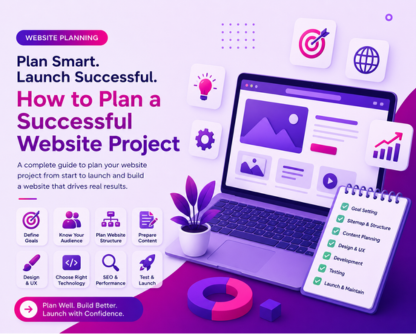
Step 1: Define Your Website Goals
Identify why you need the website, your audience, and desired actions such as generating leads or selling products.
Step 2: Understand Your Target Audience
Research customer needs, behaviors, and devices to create a user-focused experience.
Step 3: Plan Your Website Structure
Create a sitemap including pages like Home, About, Services, Portfolio, Blog, and Contact.
Step 4: Prepare Your Content
Gather text, images, videos, FAQs, and branding assets before development.
Step 5: Choose the Right Technology
Select the best platform such as WordPress, Shopify, Laravel, React, or a custom solution.
Step 6: Focus on UX
Ensure simple navigation, responsive design, readable typography, and clear calls to action.
Step 7: Brand Consistency
Use consistent colors, fonts, logos, and messaging.
Step 8: SEO
Implement keyword research, optimized URLs, headings, metadata, and internal linking from the start.
Step 9: Performance
Optimize images, code, hosting, caching, and CDN usage for speed.
Step 10: Testing
Test responsiveness, forms, links, browsers, speed, and security.
Step 11: Launch
Configure SSL, analytics, Search Console, backups, and submit the sitemap.
Step 12: Maintenance
Regularly update software, monitor security, improve SEO, and publish fresh content.
Why Choose WholeLifeTech?
WholeLifeTech delivers modern websites, custom software, mobile apps, e-commerce solutions, UI/UX design, SEO, and ongoing maintenance.
Conclusion
Careful planning leads to a successful website launch and long-term business growth.v